
01
Eligibility screening
The clinical team reviews your prescription, symptoms, medical history, mobility and baseline readings before beginning the test.
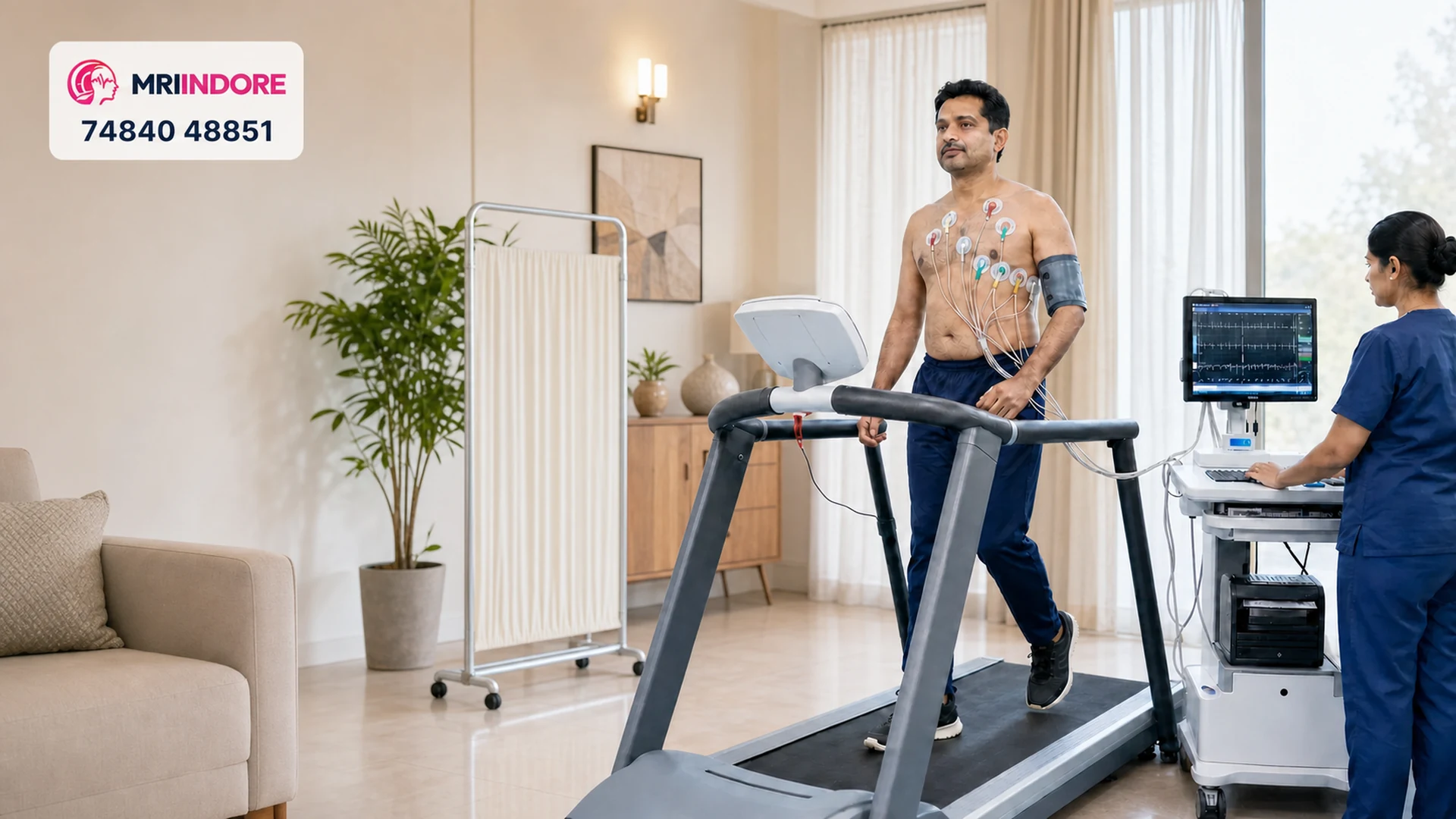
A professionally monitored cardiac stress test
Get a supervised TMT with continuous ECG, heart-rate and blood-pressure monitoring, followed by a cardiologist-reviewed digital report.
Active or severe chest pain is an emergency. Do not book or wait for a TMT; seek urgent medical care or call local emergency services.
Understanding the test
A Treadmill Test, also called a cardiac stress test or exercise ECG, records your heart's electrical activity, heart rate and blood pressure while you walk on a treadmill at gradually increasing speed and incline.
During the test, trained personnel supervise each exercise stage and watch for symptoms or changes in ECG, heart rate and blood pressure. The test can be stopped whenever clinical findings or your symptoms require it.
Exercise can reveal ECG, rhythm, blood-pressure or symptom changes that may not appear at rest. A TMT does not directly show a coronary blockage, so your doctor interprets it with your history, symptoms and any other required investigations.
When it may be advised
A TMT may be advised when symptoms occur with activity or when functional heart capacity needs assessment. It is suitable only for patients who can walk safely and are cleared after a pre-test clinical assessment.
Step by step
Allow about 30–45 minutes for setup, baseline recordings, staged exercise and monitored recovery. The supervising team may stop the test at any time based on symptoms, ECG findings, blood pressure or clinical judgment.
The clinical team reviews your prescription, symptoms, medical history, mobility and baseline readings before beginning the test.
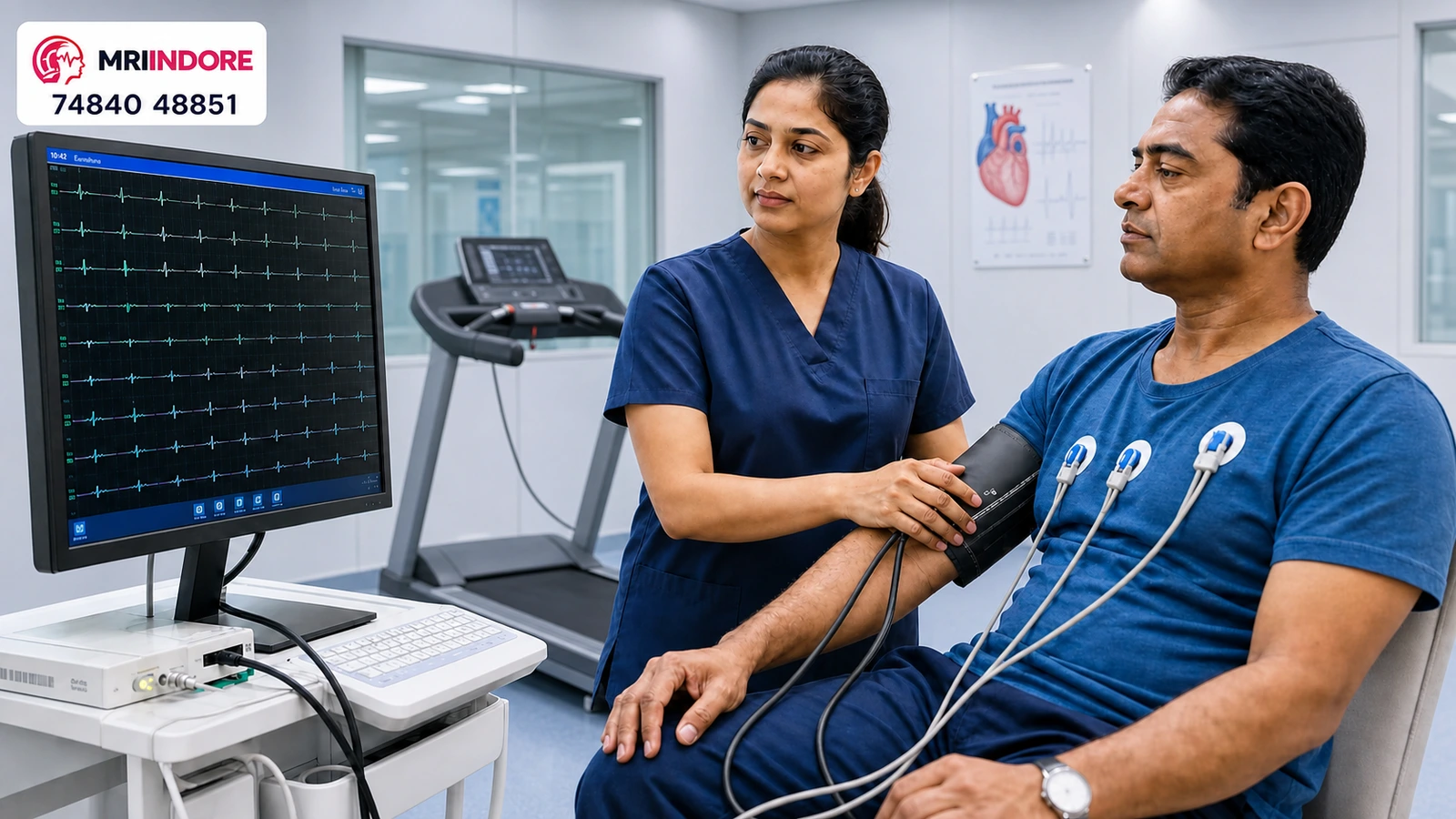
ECG electrodes are attached and your resting heart rate and blood pressure are recorded before exercise starts.
After baseline readings, treadmill speed and incline increase in stages while ECG, heart rate, blood pressure and symptoms are monitored.
Monitoring continues during recovery. Test data are then reviewed and a doctor-ready digital report is shared with you.
Patient-focused care
Trained personnel supervise every exercise and recovery stage in a properly equipped testing environment.
We review the prescription, health history, mobility and baseline readings before beginning the test.
A medical treadmill, ECG and blood-pressure equipment support observation during exercise and recovery.
Trained personnel supervise the test, recognize stopping criteria and arrange clinical review of the recordings.
Receive a clear, doctor-ready report digitally after clinical review.
TMT starts at ₹2,000; clinical requirements and package inclusions may affect the final confirmed charge.
A TMT may be postponed or replaced with another test in situations such as:
The screening clinician makes the final decision. Depending on your health, ECG and mobility, a facility-based TMT, stress echo or pharmacological stress test may be safer or more informative.
Cost & related care
TMT starts at ₹2,000. The final confirmed price may vary by clinical requirements and package inclusions. Call before booking for an exact quote.
Ask for the latest TMT priceCommon questions
A treadmill test, also called a TMT, cardiac stress test or exercise ECG, records your ECG, heart rate and blood pressure while you walk on a treadmill at gradually increasing speed and incline. It helps your doctor assess how your heart responds to exertion.
A doctor may recommend a TMT for exertional chest discomfort, breathlessness, palpitations, reduced exercise tolerance, cardiovascular risk assessment, treatment follow-up or fitness clearance. Suitability depends on your symptoms, resting ECG, blood pressure, medical history and ability to walk safely.
Wear comfortable clothes and walking shoes, avoid a heavy meal, caffeine and smoking for a few hours, and bring your prescription, medicine list and previous cardiac reports. Do not stop any medicine unless your doctor specifically tells you to.
Allow approximately 30 to 45 minutes for equipment setup, baseline recordings, staged exercise and supervised recovery. The active exercise period is often shorter and is stopped whenever symptoms, ECG findings, blood pressure or clinical judgment require it.
A TMT can show exercise-related ECG changes that may suggest reduced blood flow to the heart, but it does not directly show an artery blockage. Your doctor may recommend an echocardiogram, CT coronary angiography or another test if the result is abnormal or inconclusive.
The ECG recordings and test data are reviewed before a doctor-ready digital report is shared. Reports are generally available within a few hours, although timing may vary if the cardiologist needs additional clinical information.
Quick MRI & CT services for emergency patients